The PV-Thermal panel: the core of Bluesolar
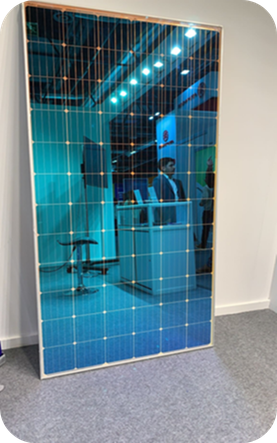
BlueSolar Technology converts a standard PV Panel into dual PV-thermal panel with an intelligent filter integrated within the glass of the panel that splits the solar spectrum, transmitting to the PV cells only useful wavelengths for the semiconductor (mainly visible part of the solar spectrum) while reflecting to the central thermal receiver of the tower the remaining wavelengths (mainly blue and IR regions).

This reflection generates heat  that can be economically stored in the form of water  and can be converted to either electricity via organic rankine turbine or directly served for industrial processes. 

The PV panel performance remains minimally affected vs a standard PV panel. The competitive factor comes from the fact that this cogeneration allows the implementation of low cost liquid water thermal storage with an excellent roundtrip efficiency of 85%.  


Bluesolar integrates a disruptive and economical hydro-thermal storage: liquid water with 85% roundtrip efficiency
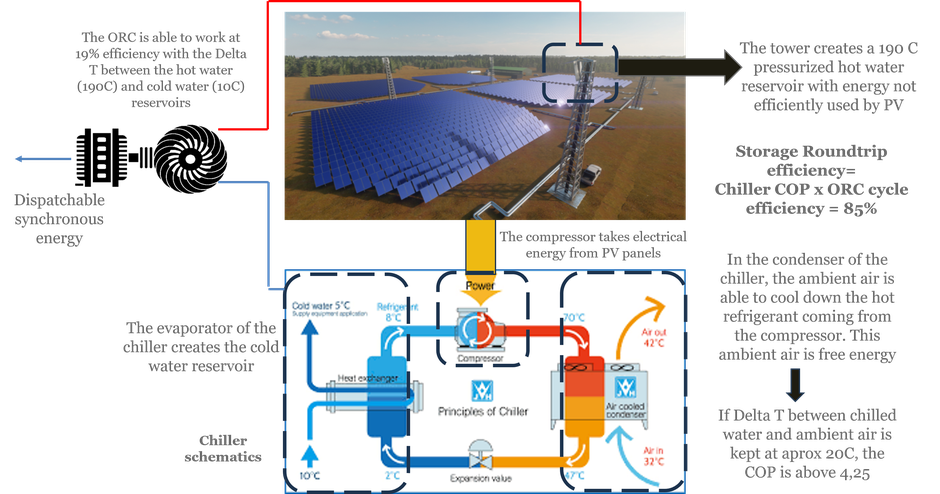
Bluesolar efficiently cogenerates electricity and heat. The heat generated in the tower is stored as liquid water in a 15 bar presurized tank @ 190C while the electricity generated in the PV panel is thermally converted using chillers and transfered to a cold water  thermal pit with a temperature of 10-15ºC. 

Both reservoirs allow the usage of an Organic Rankine cycle that, together with the COP of the chillers, provides best in class roundtrip efficiency of 85%.

See the timelapse of the construction of our pilot installation

Bluesolar is a PV based technology with hydrothermal storage, not an optimized standard concentrating solar thermal (CSP) technology using molten salts
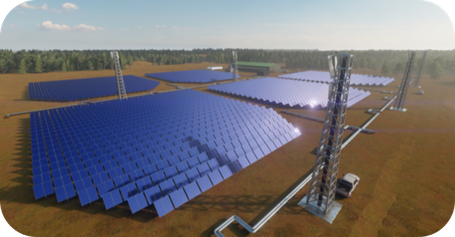
Bluesolar Hydrothermal- A different level of simplicity

Liquid water as Heat Transfer Fluid (HTF) and storage media.

The tower generates a 190C hot water reservoir.

The electricity of the panel, together with a chiller, generates a cold water reservoir.

These sources active a synchronous ORC.

Simple solar fields since liquid water is easily pumpable, which allows the implementation of compact solar fields

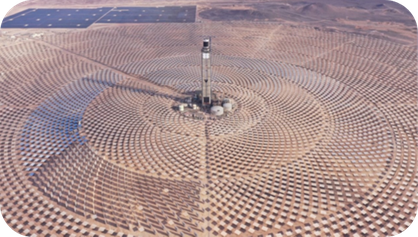
Standard molten salt Tower CSP

HTF is typically Molten Salt @ 560ºC

Corrosion and freezing factors must be carefully addressed.

Problems with the storage tanks, leaks have been common for Molten Salt tanks working @ 560ºC (however 400ºC designs as those used in parabolic trough collectors have proven to be reliable).

Massive solar fields and towers are needed to minimize transportation of the molten salt, which leads to challenging control of the heliostats and receivers.